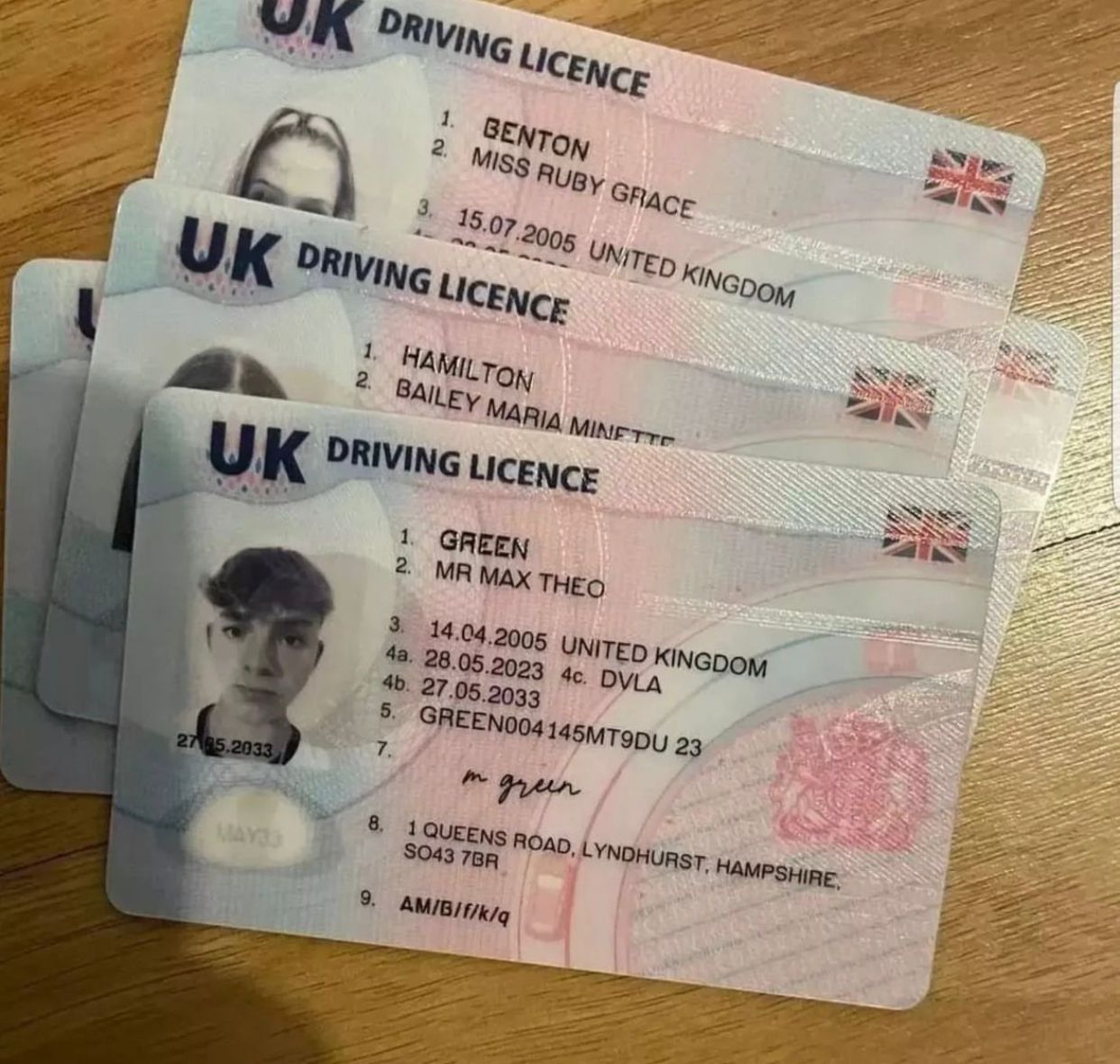
Understanding the Original UK Driver's License
In the United Kingdom, a driver's license functions as an important document, not just for travel however likewise for identification purposes. The original UK driver's license is more than a legal requirement; it embodies obligation, safety, and compliance with roadway guidelines. This blog site will dig into the different aspects of acquiring and preserving a driver's license in the UK, its structure, the requirements, and answer some often asked concerns.
The Structure of the UK Driver's License
The current UK driving license was presented in the 1990s and offers a standardized format throughout the country. Understanding the license structure is essential to comprehend the information it carries.
Table 1: License Categories
| Category | Description | Minimum Age | Notes |
|---|---|---|---|
| B | Cars and trucks (as much as 3.5 tonnes) | 17 | Consists of automatics |
| C | Big products lorries (over 3.5 tonnes) | 18 | Requires additional tests |
| D | Buses | 24 | Need to hold classification B |
| A | Motorbikes | 16/ 17 | Different limitations use |
| BE | Vehicle with a trailer | 17 | Must hold classification B |
| C1 | Medium-sized items automobiles | 18 | Additional screening required |
| D1 | Minibuses | 21 | Additional tests needed |
Each category defines the type of vehicles one can run, together with the minimum age and pre-requirements if applicable.
Getting an Original UK Driver's License
Actions to Apply for Your License
Making an application for an original UK driver's license includes several actions, from preparing required documents to passing assessments. Below is a useful guide:
- Check Eligibility: You should be at least 17 years of ages for a standard cars and truck license (Category B).
- Provisional License: Apply for a provisional license which enables you to practice driving under the guidance of a certified driver.
- Reserve Driving Lessons: Choose an approved driving instructor and start your lessons.
- Pass the Theory Test: This test assesses your knowledge of roadway rules and driving guidelines, incorporating multiple-choice questions and hazard perception tests.
- Pass the Practical Driving Test: After passing your theory test and feeling confident behind the wheel, book your useful driving test. This will assess your driving abilities in real traffic conditions.
- Receive Your Full License: Upon passing your useful test, your examiner will send your provisional license to the DVLA, which will then release your original driver's license.
Needed Documents
When getting a provisional or full driver's license, you will need to offer essential documents which include:
- Proof of identity (passport or birth certificate)
- National Insurance number
- Address history for the last three years
- A passport-sized picture
Table 2: Costs Associated with Obtaining a Driver's License
| Item | Approximated Cost (₤) |
|---|---|
| Provisional License Fee | 34 |
| Theory Test Fee | 23 |
| Practical Test Fee | 62-75 |
| Driving Lessons (per hour) | 25-50 |
| Full License Fee | 34 |
Restoring and Maintaining Your Driver's License
As soon as you have your driver's license, it is crucial to understand how to preserve and renew it properly. An original UK driver's license typically lasts for 10 years before you require to renew it. Below are the actions to ensure your license stays legitimate.
Renewal Process
- Check Expiry Date: Keep an eye on the expiration date of your driver's license.
- Application: You can restore your license online through the DVLA's site or by mail.
- Charges: A renewal fee of ₤ 34 uses online or by means of post.
- Files Required: Most of your previous documents ought to be enough unless a modification in personal information has actually taken place, like a change of name or address.
Table 3: Important Rules for License Maintenance
| Rule | Description |
|---|---|
| Modification of Address | You must upgrade your address within 28 days. |
| Change of Name | Update your license when you change your name. |
| Validity of License | License should be restored every 10 years. |
| Medical Reporting | Report any changes in medical conditions. |
Penalties for Non-Compliance
Driving without a valid license can result in extreme repercussions, consisting of fines, points on your driving record, or even disqualification from driving. Compliance with guidelines and guidelines is paramount to ensure the security of all roadway users.
FAQ: Common Questions About UK Driver's Licenses
Q1: Can I drive with a provisionary license?A1: Yes, you can drive with a provisionary license, but just when accompanied by a qualified driver aged 21 or over who has held a complete license for a minimum of 3 years.
Q2: How do I obtain my license if I'm not a UK local?A2: Non-residents might still apply, however specific requirements get worldwide or foreign nationals. It's best to talk to the DVLA for standards.
Q3: What takes place if I lose my driver's license?A3: You can request a replacement license through the DVLA online, by phone, or via post. The charge for a replacement license is also ₤ 34.
Q4: Can I drive in other nations with my UK driver's license?A4: Generally, yes, however you might need an International Driving Permit (IDP) depending on the country you are going to. Constantly inspect country-specific guidelines.
Q5: What if I need to take a driving medical test?A5: If you have a medical condition that may impact your driving, you are needed to inform the DVLA, which may demand a medical assessment.
Acquiring and preserving an original UK driver's license includes more than just practical evaluations; it includes understanding your responsibilities as a driver. Following ukdrivinglicense.co.uk , sticking to laws, and remaining informed can considerably improve your driving experience and total safety on the road. With this thorough guide, individuals can much better browse the procedure of acquiring and keeping their driver's licenses in the UK. Remember, safe driving is a shared duty that benefits everyone on the road.